
What changes a custom rigid box quotation?
A useful rigid box quotation describes what you will receive: the box, any insert and accessories, the appearance, the quantity and the delivery scope. A unit price alone leaves too much open.
You can start with a product photo, an approximate quantity and a destination. Share the details you have; dimensions, materials and artwork can be clarified in the next conversation.
Start my rigid box quote brief ↗︎Define the complete box
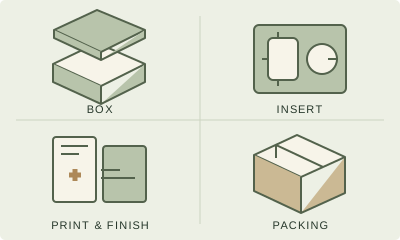
- Structure & dimensions
- Identify lift-off lid, drawer, shoulder or hinged construction. Label dimensions as product, inside box or outside box, with units. A product measurement is a starting point for fit review, not a finished box size.
- Board & covering
- Record the structural board separately from the covering paper and interior lining. If you only have a reference image, describe the look and feel you want rather than guessing a paper grade.
- Insert & accessories
- State whether the box includes a fitted insert, ribbon, sleeve, card or closure. Send product dimensions and weight so support and removal can be reviewed. Ask whether the quoted unit includes all these components.
- Printing & finishes
- Identify printed surfaces and the position and approximate area of foil, embossing or other effects. One small logo and a large decorated surface describe different work. A reference image should be translated into an agreed specification and sample.
Explore box structures, materials, finishes and inserts as needed. You do not need to choose every option before contacting us.
Quantity and packing belong in the same brief
YDP’s minimum order quantity is 500 pieces. List planned quantities by size and artwork. If you are combining versions, ask how the order will be quoted; do not assume different specifications can share one quantity basis.
Specify whether boxes and inserts arrive fitted together or separately, and whether products will be packed by your team. Ask for the proposed pieces per carton, carton dimensions and gross weight when reviewing delivery. A finished box dimension does not describe the full shipment.
For a fold-flat alternative, use the collapsible box cost checklist to include assembly and packing at the same delivery stage.
Compare proposals on the same basis
Keep one specification revision beside both quotations. Highlight any substitution or exclusion before comparing totals. Check these three layers:
- Packaging: same structure, dimension basis, board, covering, insert, artwork and finish scope; same quantity breakdown and quoted unit.
- Development: sample, tooling, artwork or setup charges identified separately where applicable; confirm what each charge covers and whether any credit is offered.
- Delivery: same currency, destination, packing stage and transport scope; identify responsibility for freight, duties and taxes, together with exclusions and quote validity.
A lower price may cover a different package or a different delivery responsibility. Ask for an explanation of the differences. If timing matters, distinguish sample preparation, approval, production and transit instead of treating one date as the whole schedule.
A short first brief is enough
- Product: photo or drawing, dimensions with units and filled weight if known.
- Box direction: preferred opening or a reference photo; say whether an insert is needed.
- Appearance: logo or artwork status, colour reference and desired finishes.
- Order: estimated quantity, with any size or artwork versions listed separately.
- Destination & date: country and city or postal code, plus your target arrival date.
Mark missing details “not sure yet.” Before placing an order, agree the written specification, quotation scope and the sample approval checks. Start with the custom rigid box route or discuss a magnetic closure box if that is the opening you need.
Send the details I have ↗︎