CUSTOM PACKAGING / Box Styles

Start with the shape.

Find the opening and presentation you have in mind.

EXPLORE THE OPTIONS

Box Styles

Search by a familiar name or browse the list. Use an option as your current preference; you can change it while exploring. A photo is enough if you do not know the terminology.

How saving works: Keep one current box structure or opening. Magnetic closure and windows can be added as features.

How to read this list: Ten entries describe a box construction or opening. Magnetic closure and window are combinable features. Open the variant notes for supply format and sample checks; these starting points do not limit the structures we can review.

Need a tuck, snap-lock or auto-bottom carton? Compare the bases ↓

12 options shown

Structures & openings

Choose the basic form and opening.

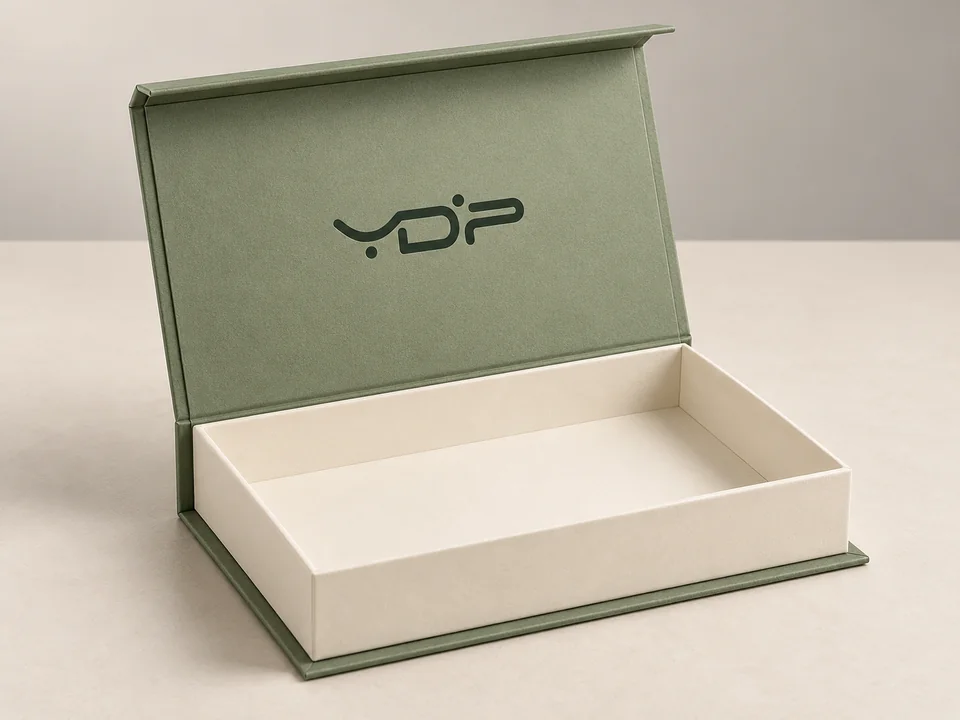
Sage book-style rigid box showing its case cover, spine and ivory tray with YDP mark
Hinged presentation

Book-style boxes

Fixed rigid structure

A book-like opening brings the lid and base together for a coordinated reveal.

Consider for: Gift collections, fragrance sets and coordinated product ranges.

Variants & sample checks

Supply format
Fixed rigid case and tray normally remain formed. A flat-pack book-style version needs a separate collapsible construction.

Overhanging case
Cover boards extend beyond the inner tray; the spine connects the top and bottom covers.
Flush or wrapped case
Cover proportions and tray attachment change the profile. Confirm the section and opening with a sample.

Check on the sample

  • Close the lid with the intended insert and product loaded.
  • Review spine clearance, hinge movement and cover alignment.
  • Specify the closure separately: magnets, ribbon or another agreed method.
See combinations & suitability ↗︎Use as my box preference
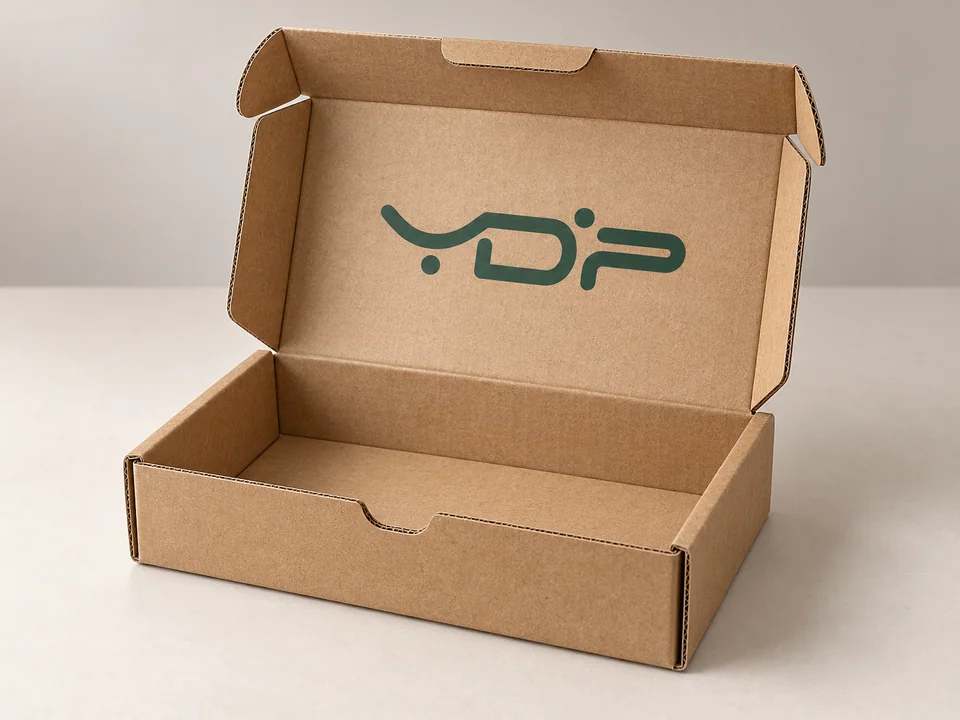
Kraft corrugated mailer showing an attached lid, locking flaps and YDP mark
Fold & lock

Mailer boxes

Folding structure

A fold-up box with locking tabs for packing and opening.

Consider for: E-commerce products, subscription assortments and shipping-led projects.

Variants & sample checks

Supply format
Usually delivered as flat die-cut blanks for assembly at packing. Include assembly steps and any separate insert in the supply plan.

Lock-tab mailer
The lid and side flaps tuck into the formed base; cut and score positions define the locking sequence.
Mailer with added sealing
Tape or a specified adhesive closure may be added for dispatch. State tamper-evidence and return requirements separately.

Check on the sample

  • Trial the folding and locking sequence on the selected board.
  • Pack the actual products and inspect movement and contact points.
  • Agree the shipping pack and transport-test scope for the intended route.
See combinations & suitability ↗︎Use as my box preference
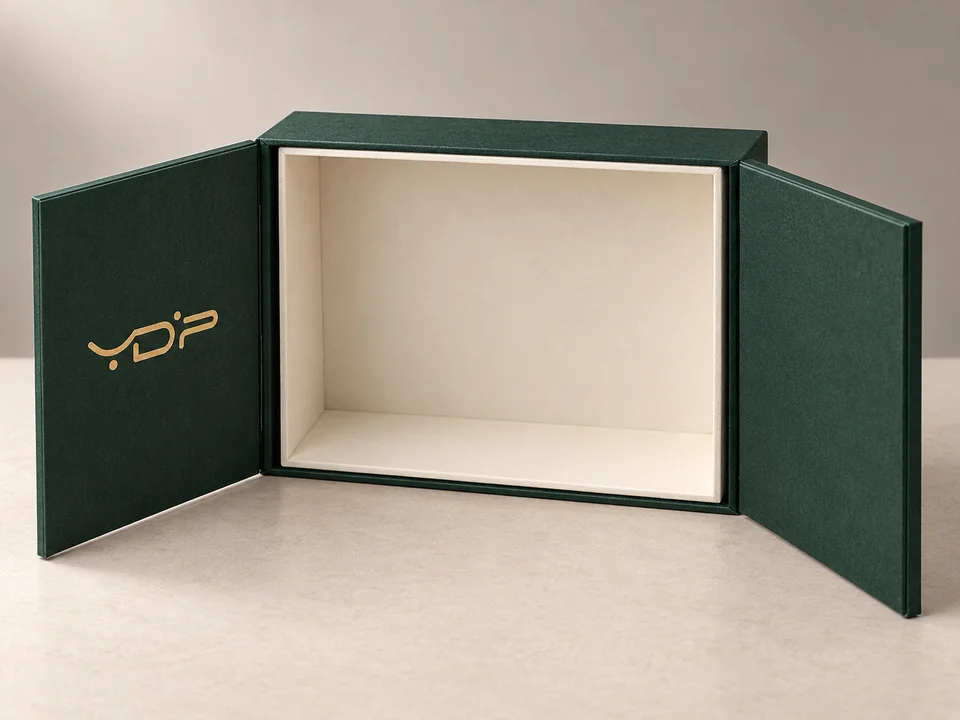
Green rigid presentation box with two side-hinged doors and a YDP mark
Open from the centre

Double-door boxes

Fixed rigid structure

Two opening panels frame the product or gift set inside.

Consider for: Gift sets and launches where a symmetrical opening is part of the experience.

Variants & sample checks

Supply format
Usually delivered assembled. Agree whether the insert, ribbon or magnetic components are fitted before delivery.

Two hinged doors
Left and right doors meet at the centre and open around the product tray.
Doors with a separate drawer
A drawer can be added behind or below the doors. This is an additional mechanism, not implied by the name.

Check on the sample

  • Check the centre gap and door heights with the box closed.
  • Review door swing, product access and clearance around the display.
  • Align graphics across the join and confirm closure positions.
See combinations & suitability ↗︎Use as my box preference
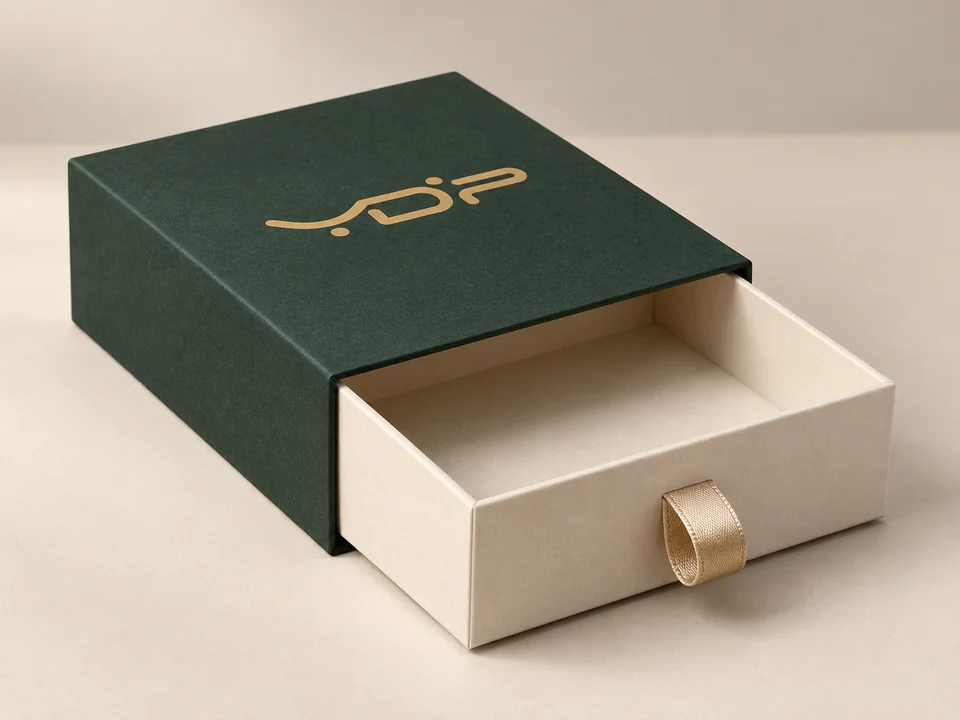
Green sleeve with a partly extended ivory-lined drawer and YDP mark
Slide & reveal

Drawer boxes

Fixed rigid structure

A sliding tray inside a sleeve gives the product a gradual reveal.

Consider for: Jewelry, accessories, discovery sets and small product collections.

Variants & sample checks

Supply format
Rigid sleeve and tray are usually formed and nested. Paperboard drawer versions can have a different folding and delivery format.

Open-ended sleeve
A tray slides through the sleeve; retention and travel must be specified.
Sleeve with a stop or closed end
An agreed stop or end construction can limit travel. Confirm which end opens and how the tray is retained.

Check on the sample

  • Slide the loaded tray and check rubbing or excessive looseness.
  • Test pull-loop attachment or finger-notch access.
  • Agree tray retention and product removal from the insert.
See combinations & suitability ↗︎Use as my box preference
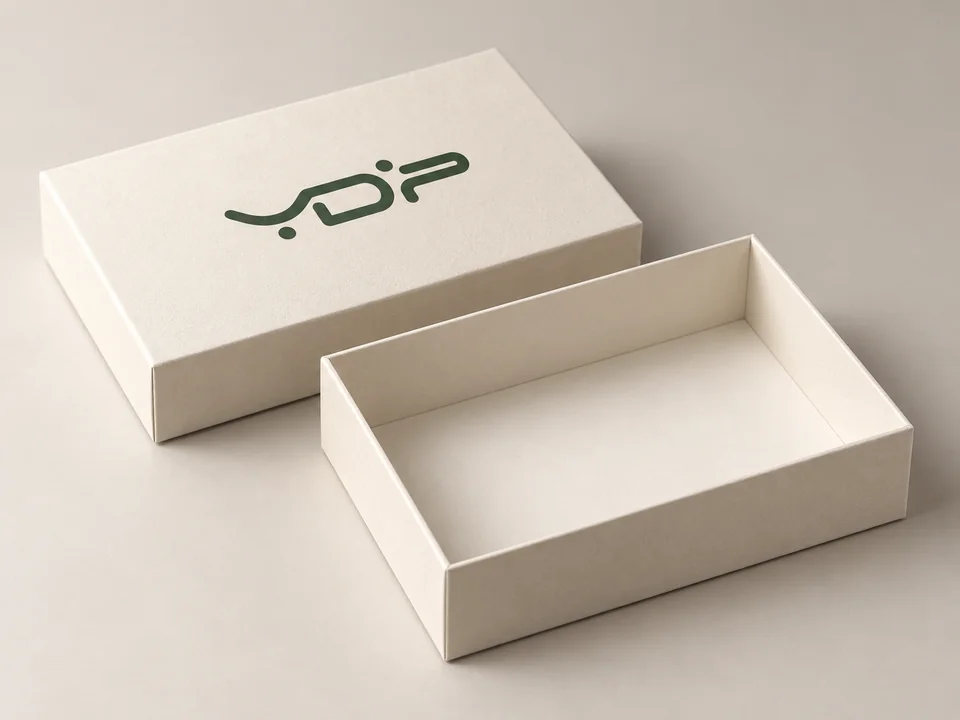
Ivory two-piece rigid box with its separate lift-off lid and YDP mark
Lift-off lid

Lid & base boxes

Fixed rigid structure

A separate lid and base with a choice of lid depth and proportions.

Consider for: Single products, gift sets and collections that need a versatile presentation.

Variants & sample checks

Supply format
Lid and base are normally formed and nested. Specify whether the insert is already fitted and how the finished set is packed.

Partial-depth lid
Part of the base remains visible when the lid is closed.
Full-depth lid
The lid extends nearly to the bottom. Opening grip and clearance require review.

Check on the sample

  • Review lid removal with the actual wrap and board thickness.
  • Check the closed reveal, corners and artwork orientation.
  • Confirm product height, insert clearance and removal grip.
See combinations & suitability ↗︎Use as my box preference
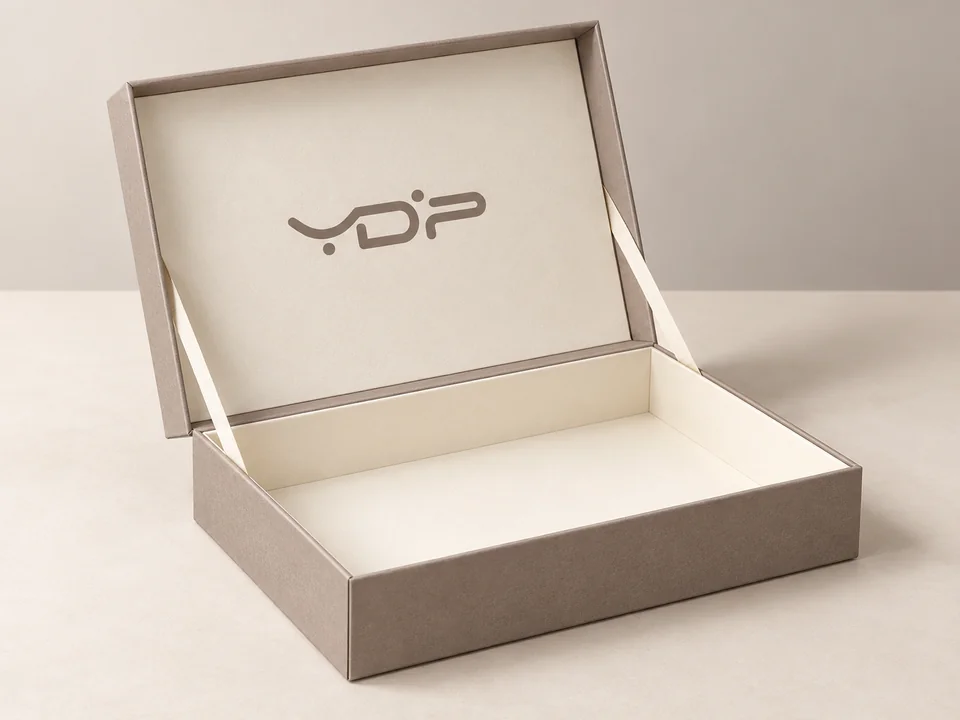
Taupe rear-hinged box with ribbon stays and YDP mark
Attached lid

Flip-lid boxes

Fixed rigid structure

An attached lid opens above the product for convenient access.

Consider for: Retail gift packaging and products that will be opened repeatedly.

Variants & sample checks

Supply format
Usually delivered formed. The hinge, lid support and closure are developed together around the loaded tray.

Rear-hinged tray
The lid attaches directly to the rear of the tray, without a separate loose lid.
Opening-limited lid
Ribbon stays or another support may limit lid travel. Specify the required viewing angle.

Check on the sample

  • Open repeatedly to the agreed angle and inspect the hinge area.
  • Check that support ribbons do not trap or rub the product.
  • Confirm the lid sits evenly and the chosen closure engages.
See combinations & suitability ↗︎Use as my box preference
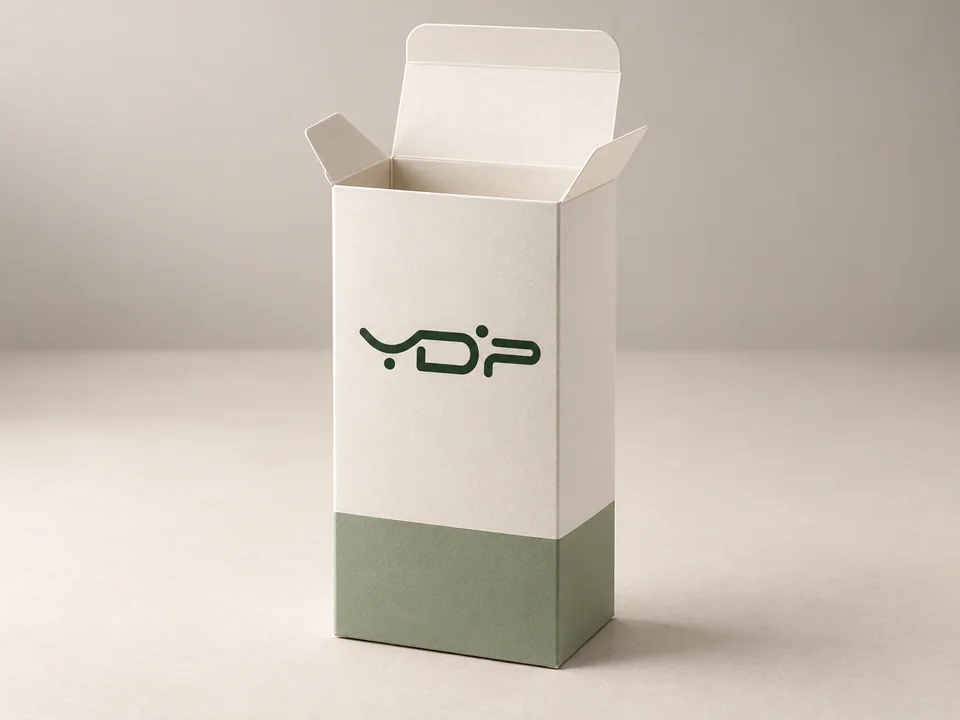
White and sage paperboard carton showing top tuck and dust flaps with YDP mark
Printed paperboard

Double-tuck cartons

Folding structure

Top and bottom tuck flaps create a compact carton around the product.

Consider for: Individual retail products, beauty ranges and lightweight accessories.

Variants & sample checks

Supply format
Usually side-seam glued and delivered flat. Confirm erection, product loading direction and whether bottom assembly is manual or pre-glued.

Straight tuck end / STE
Top and bottom main tuck flaps hinge from the same side panel.
Reverse tuck end / RTE
Top and bottom main tuck flaps hinge from opposite side panels.
Different bottom needed?
Snap-lock and glued crash-lock bottoms are separate constructions. Compare them below rather than treating every carton as double-tuck.

Check on the sample

  • Include the cap, sealed tube end and filled weight in the product brief.
  • Choose the bottom from the loading method and intended product load.
  • Review flap engagement, board creasing and artwork orientation on the dieline.
See combinations & suitability ↗︎Use as my box preference
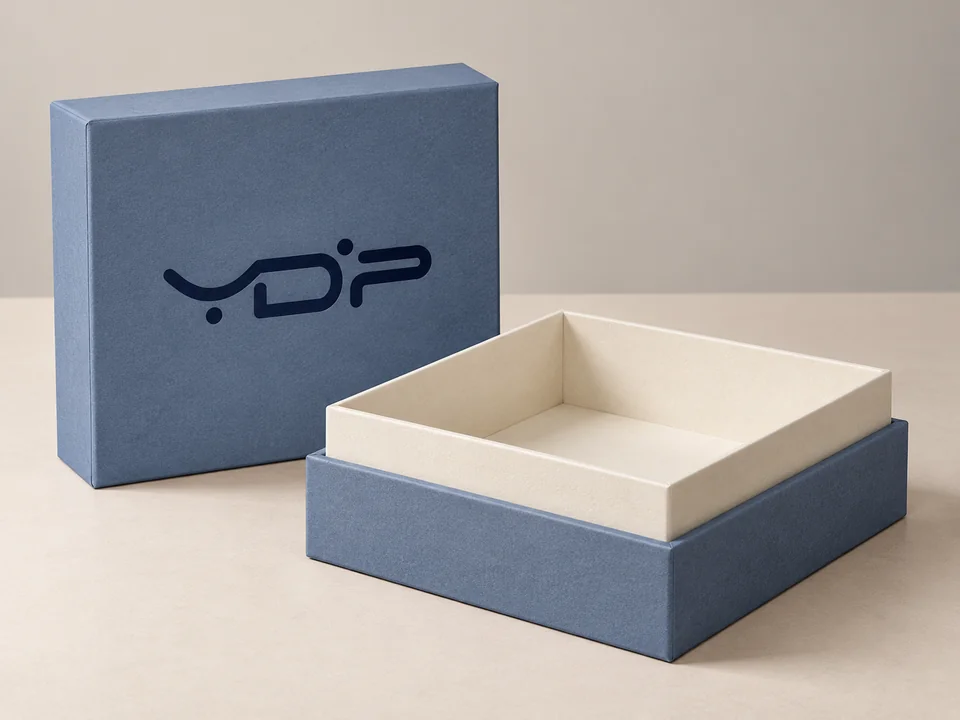
Blue rigid box with a visible ivory inner neck beside its separate YDP-branded lid
Layered reveal

Shoulder-neck boxes

Fixed rigid structure

An inner shoulder creates an extra visible layer between lid and base.

Consider for: Fragrance, accessories and presentation-led gift packaging.

Variants & sample checks

Supply format
Lid, base and inner neck are normally formed and assembled before delivery; specify insert installation separately.

Exposed shoulder
A visible neck band separates lid and base when the box is closed.
Concealed neck
The inner neck guides the lid while the closed exterior can have a narrower reveal.

Check on the sample

  • Check lid fit over the wrapped neck, including the corners.
  • Confirm the intended visible band or closed gap.
  • Load the product and review lid headroom and access.
See combinations & suitability ↗︎Use as my box preference
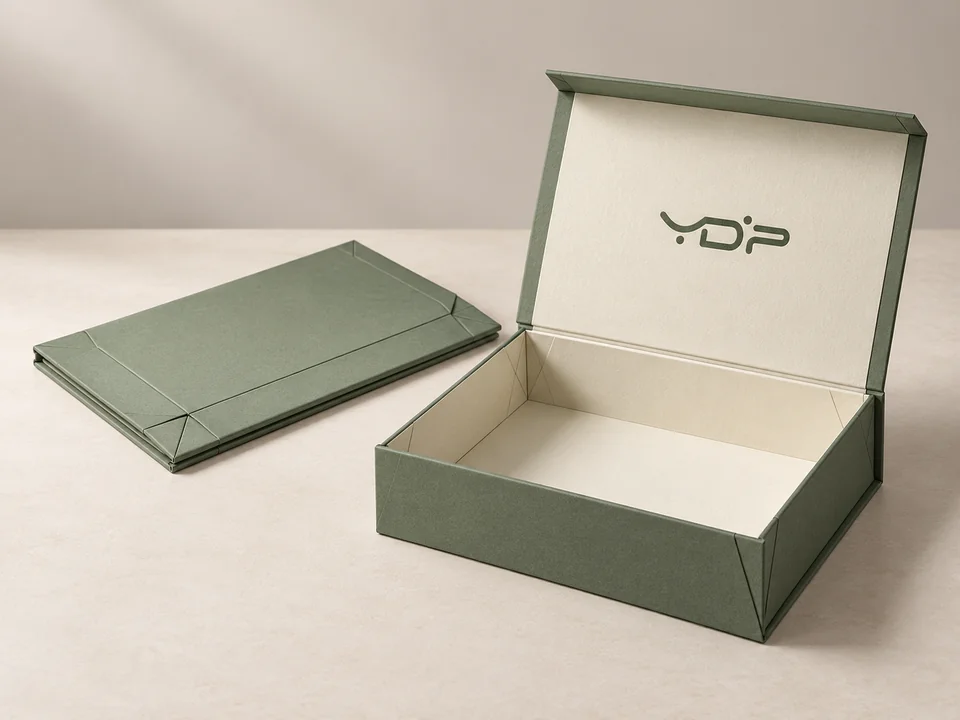
Sage collapsible rigid boxes shown assembled and flat, with YDP mark
Flat-pack format

Collapsible rigid boxes

Collapsible rigid structure

A rigid presentation with a construction designed to fold for delivery.

Consider for: Gift packaging where boxes are stored or delivered before final assembly.

Variants & sample checks

Supply format
Designed for a flat delivered format. Confirm the actual folded size, who erects it and whether inserts travel separately.

Adhesive corner assembly
The delivered flat pack forms a rigid box using agreed corner adhesive connections.
Reclosable or mechanical connections
Repeated collapse requires a compatible connection design. Do not assume an adhesive-built box folds flat repeatedly.

Check on the sample

  • Trial assembly with the intended packing team and components.
  • Check erected corners, lid alignment and loaded product fit.
  • Measure all outer cartons, including separately packed inserts, before comparing logistics.
See combinations & suitability ↗︎Use as my box preference
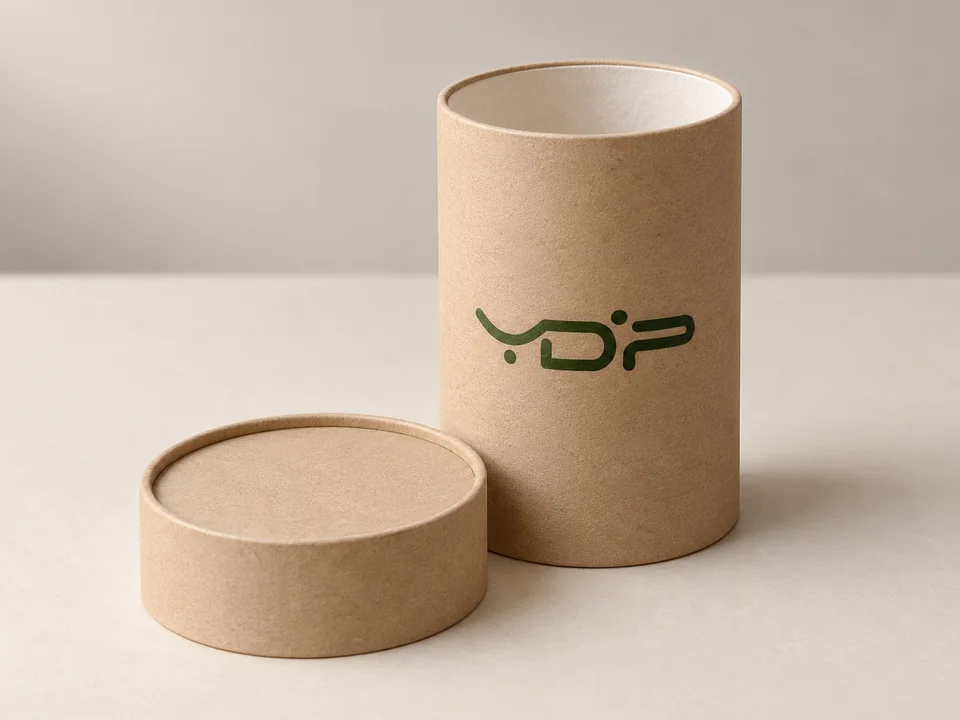
Kraft cylindrical paper package with separate cap and printed YDP mark
Cylindrical format

Paper tube packaging

Tubular structure

A round packaging direction supported by YDP’s paper tube production line.

Consider for: Round products, candles, accessories and gift presentations.

Variants & sample checks

Supply format
Usually supplied formed. Confirm cap position, end construction, fitted supports and the outer-carton arrangement.

Two-piece lift-off tube
A separate cap fits the tube body; lid depth and usable internal height are specified together.
Shouldered tube
An inner neck guides the cap and can create a visible band between cap and base.

Check on the sample

  • State internal diameter, usable height, wall and end construction.
  • Test cap removal, retention and product extraction.
  • Confirm whether a separate barrier container is required for the product.
See combinations & suitability ↗︎Use as my box preference

Features to combine

Add magnetic closure or a window to a compatible construction.

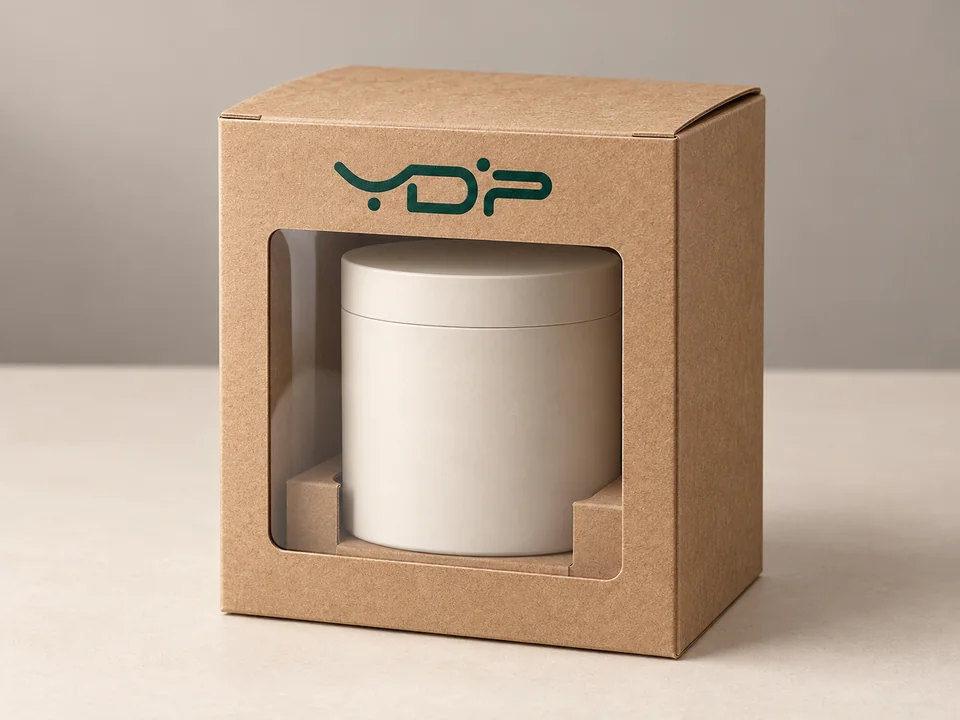
Kraft folding carton with a film-backed viewing window and YDP mark
Show the product

Window boxes

Window feature · combine with a structure

A cut-out window makes part of the product visible before opening.

Consider for: Retail products where seeing colour, texture or the item itself helps selection.

Variants & sample checks

Supply format
The base carton or rigid box determines the format. Film application and product support are separate scope items.

Open cut-out
A die-cut viewing area leaves the product exposed through the opening.
Film-backed window
A specified clear film covers the opening. Confirm film, attachment area and any separation requirements.

Check on the sample

  • Position the window around the product that must remain visible.
  • Review border width, film attachment and panel stiffness.
  • Hold the product behind the window without obscuring the view.
See combinations & suitability ↗︎Add this feature
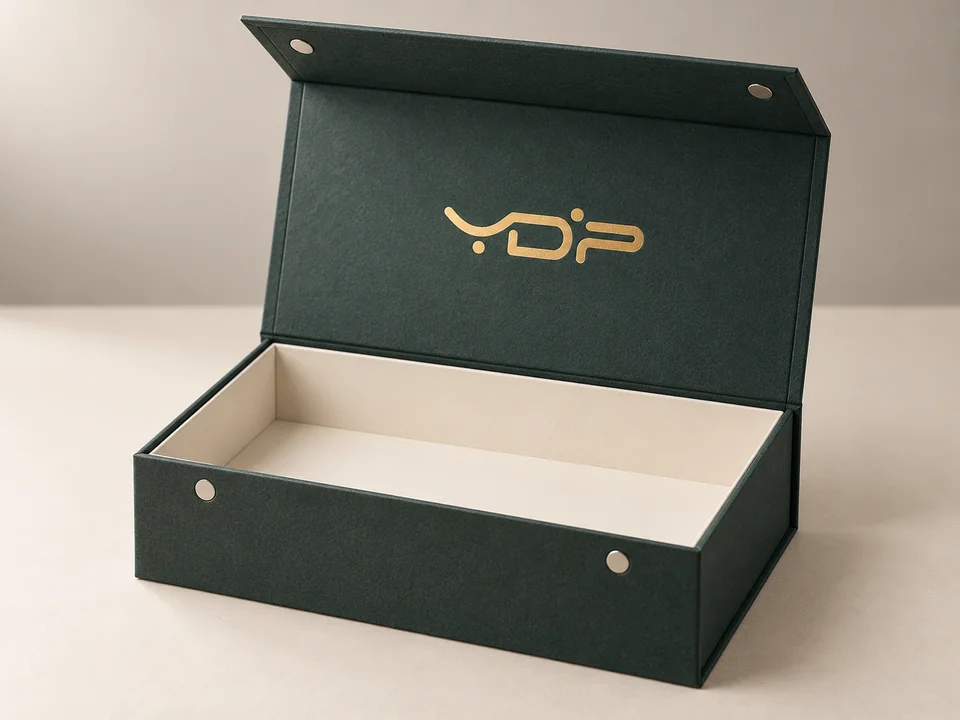
Green hinged box showing a magnetic flap and mating closure points with YDP mark
Closure option

Magnetic closure boxes

Closure feature · combine with a structure

A magnetic flap can be considered with a fixed or collapsible construction.

Consider for: Presentation boxes and reusable gift packaging with an attached lid.

Variants & sample checks

Supply format
Delivery format follows the chosen base construction. Specify the number, location and covering of magnetic components in the reviewed design.

Fixed rigid construction
Magnets can close a hinged rigid box while its structure remains formed.
Collapsible rigid construction
Magnets may close the lid; corner connections still determine how the box assembles or collapses.

Check on the sample

  • Align the mating closure points on the loaded box.
  • Review opening effort, flap reach and product clearance.
  • Decide how the complete pack is secured for dispatch; magnets are not a transport lock.
See combinations & suitability ↗︎Add this feature

Images show example constructions and features, not approved production drawings. The dieline, material, closure, product fit and performance checks are agreed with your project sample.

A BOX IS A COMBINATION

Structure, opening, closure.

These 12 names are useful starting points. Some describe how the box is built, while magnetic closure and a window can be combined with other structures.

Sage book-style rigid box showing its case cover, spine and ivory tray with YDP mark
Book-style structure
Green hinged box showing a magnetic flap and mating closure points with YDP mark
Magnetic closure
One box combining both choices

The closure can change without changing the basic opening.

Structure
Rigid, collapsible, folding or tubular.
Opening
Lift-off lid, drawer, hinged lid or tuck flaps.
Closure
Fit, tuck, magnets or another approved method.
PAPERBOARD CARTON VARIANTS

Choose the bottom
as well as the shape.

A similar outside shape can use different flap arrangements. Compare loading, assembly and filled weight before choosing the dieline.

Straight tuck end

Top and bottom main tuck flaps hinge from the same side. Agree the loading direction and how the artwork follows the blank.

Two tuck closures · side seam usually glued

Reverse tuck end

The main tuck flaps hinge from opposite sides. Review flap access, orientation and product retention for your packing method.

Two tuck closures · a different flap layout

Snap-lock bottom

Bottom flaps are folded and interlocked during packing. Check the manual assembly sequence, engagement and fit with the loaded product.

Manual locking base · often called a 1-2-3 bottom

Crash-lock / auto bottom

A pre-glued bottom opens into position as the carton is squared. Review glue joints, folded thickness and the loaded sample.

Pre-glued base · assembly differs from snap-lock

Bottom style alone does not establish load capacity. Board, dimensions, glue, insert and product weight belong in the same review. These variants need their own approved dielines.

THE COMPLETE PACKAGING

Bring the choices together.

Review what you saved and change anything you like. Choose only what you know; leave the rest open for our recommendation.

Explore these choices in complete packaging: Custom Rigid Boxes ↗︎ Custom Folding Cartons ↗︎ Custom Paper Tube Packaging ↗︎