
PACKAGINGReview the packaging details and confirm fit with a sample.
A magnetic gift box for scarves.
Let the fabric lead.
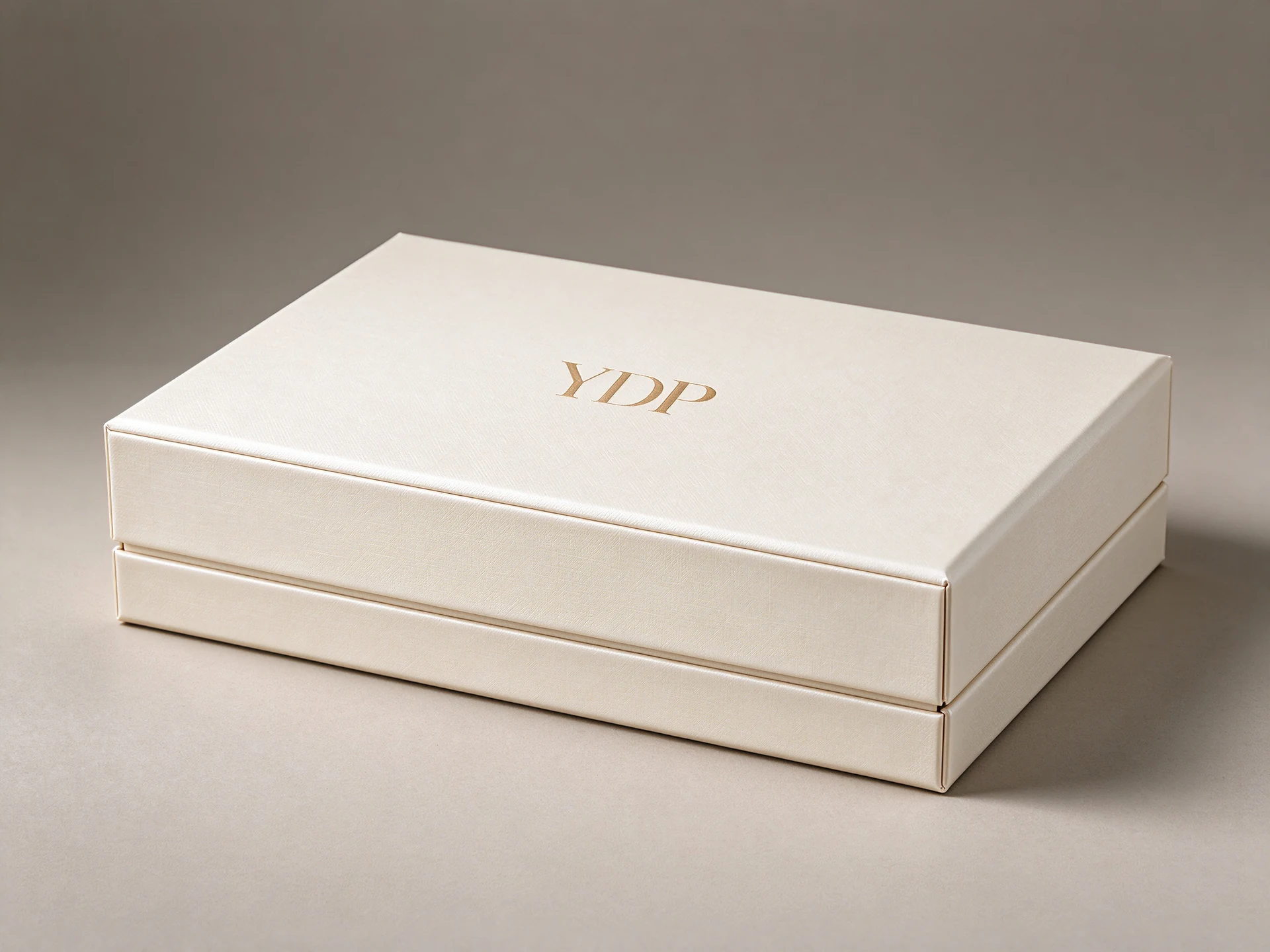
An ivory magnetic gift box with gold foil and a tissue-lined interior, sized around your folded scarf.
MOQ 500 boxes · Start with a photo or short request.
Recommended starting point
- Product
- One folded scarf
- Structure
- Hinged rigid box; magnetic closure
- Material
- Rigid board & textured ivory paper
- Branding
- Gold foil logo
- Interior
- Tissue & a loose brand card
- Supply
- Assembled; compare a collapsible version
Quick navigation 6 sections
Frame the scarf.
Keep the layers simple.
Start with the folded product. The interior should hold its presentation while leaving room to lift the scarf out.
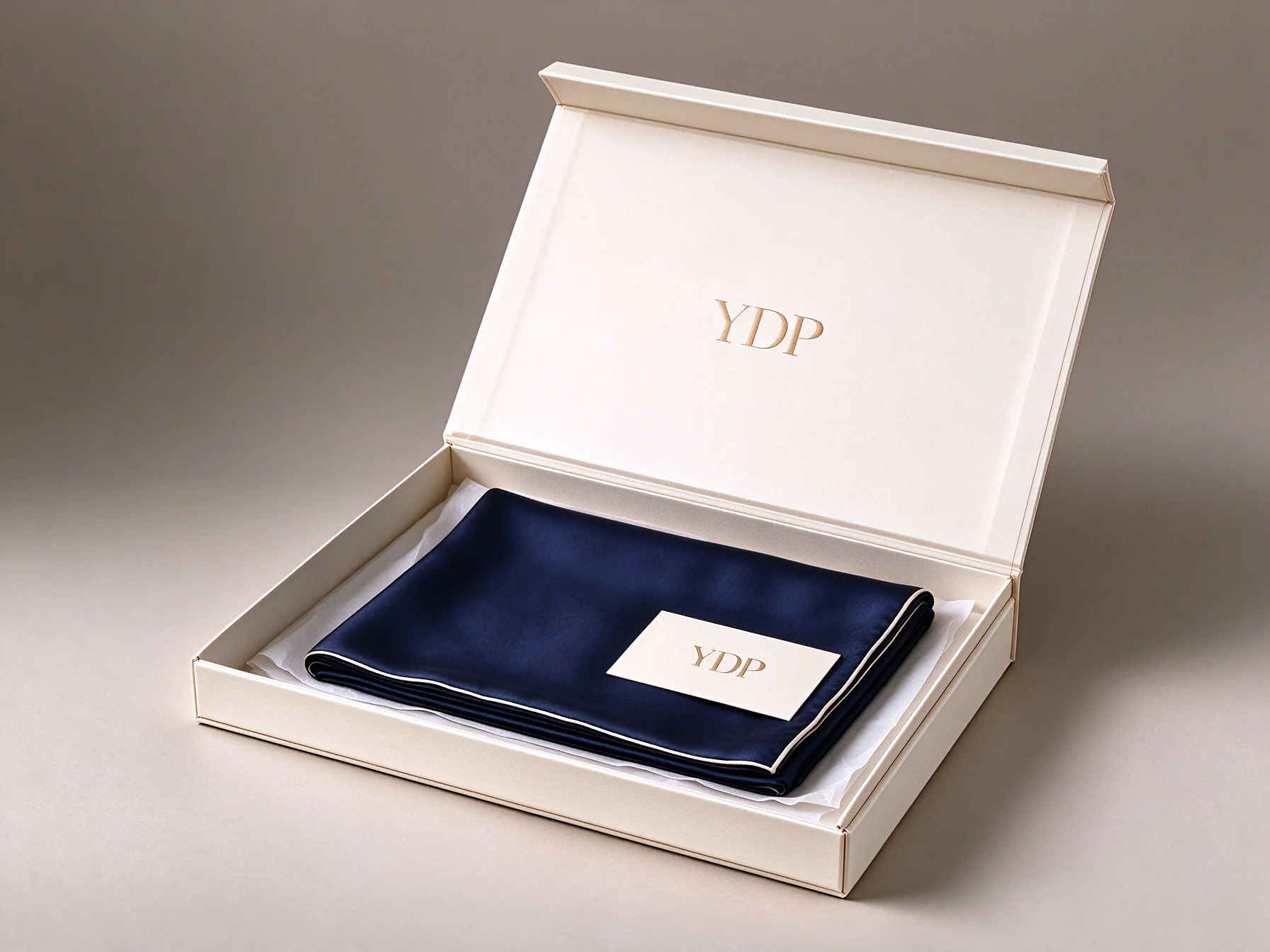
Measure it as it will be packed.
Use the folded length, width and stacked thickness, including tissue. Leave working clearance so the lid closes without pressing the fabric.
Start with tissue and a card.
A single soft scarf may need no shaped insert. Keep the fold visible and easy to lift out; trial a paper band if handling disturbs the presentation.
Give hard accessories their own support.
A brooch, jewellery piece or other hard item changes the interior brief. Separate its position and contact surfaces to protect the fabric.
A clear reveal.
A quiet exterior.
See the transition from the folded scarf to the closed gift box. During sampling, check flap alignment, comfortable opening and clearance above the fabric.
Explore magnetic box options ↗︎Keep the texture.
Choose where to add gold.
Compare two decoration routes for the same folded product and quantity. Both start with a fitted box size, tissue and a brand card.
Full component specification Structure, paper, branding & interior
- Box & closure
- Wrapped rigid board with a hinged lid and concealed magnets. Select board thickness, closure layout and flap overlap around the final size.
- Surface paper
- Textured ivory wrap inside and out. Review colour, wrapped corners and fold areas on a complete sample.
- Gold foil
- Trial your logo on the chosen paper for clean edges and coverage. Specify exterior-only or inside-and-out branding.
- Product-contact layers
- Tissue and a loose brand card, selected for the actual fabric. Add a paper band or separate accessory support only where needed.
- Finished size
- Use the scarf’s packed length, width and thickness, including tissue. Allow for lid clearance and comfortable removal.
- Supply & order
- Start with assembled boxes, or develop a collapsible version. Minimum order: 500 boxes. Specify the outer shipping pack separately.
What changes the quote? Size, finish, interior & order mix
- Size & packed volume
- A thicker fold changes box depth and shipping volume. Review the packed scarf before adding space.
- Paper & decoration
- Compare the selected textured paper, foil coverage and number of decorated surfaces.
- Interior & packing work
- Include tissue, card, any band and the work needed to prepare each box for filling.
- Quantity & versions
- Separate quantities by box size and artwork. Different versions can require separate setup and packing.
Ready to fill.
Or ready to assemble.
Start with assembled supply for immediate filling. Consider a collapsible version when storage space and inbound packing are priorities.
Supply assembled.
Your team adds tissue, scarf and card. The box arrives formed, so allow storage and shipping space for its full volume.
Develop a collapsible version.
Your team forms the box before filling. Compare carton volume, assembly time and labour together before choosing this route.
What needs reviewing for fold-flat supply? Corner connections, assembly & total packing cost
Magnetic closure and collapsibility are separate specifications. A collapsible version needs defined fold lines, corner connections and assembly steps; the current visuals do not demonstrate that mechanism.
Compare complete samples for squareness, closure and filling. Ask for packed carton dimensions, units per carton and an assembly trial so both routes can be assessed on the same quantity.
Explore collapsible rigid boxes ↗︎Check the filled box.
Then confirm the details.
Before a fitted sample, share the scarf or its packed dimensions and your logo artwork. Agree sample scope, costs and lead times with sales.
Review the fold, product-contact layers, magnetic closure and chosen supply format together.
Four checks for the sample review What to check & what may need adjusting
- Fold & removal
- Close the filled box, then lift the scarf out. Review depth, tissue allowance and any pressure or unwanted movement.
- Product-contact layers
- Check the actual fabric against tissue, card and any band for snagging, rubbing or colour transfer. Adjust the paper and its placement.
- Closure & finish
- Check flap alignment and opening feel with the product packed. Inspect foil, wrapped corners and fold areas on the same sample.
- Supply & shipping
- For a collapsible version, trial forming and filling. Agree transit checks for the complete gift box inside its intended outer shipping pack.
Choose your next packaging decision.
Explore magnetic gift boxes ↗︎
Review the opening, closure and space required for your product.
Compare flat-supplied construction ↗︎
Check assembly, corner connections and packing volume before choosing a format.
Prepare a comparable quotation ↗︎
Bring product size, quantity, finish and delivery scope into your brief.
Beyond scarves.
Adapt the size and interior around your product while keeping the ivory-and-gold presentation.
Ties & pocket squares
Keep the shallow presentation, tissue and card. Rework the size around the chosen fold and number of pieces.
Wallets & cardholders
Carry over the magnetic opening and restrained branding. Review depth, weight, surface contact and any added support.
Branded gift sets
Use a coordinated exterior, then plan separate positions and support for each item in the set.