The round format serves the jar.
The complete jar can enter and leave the opening comfortably, and a base or insert can be developed around its filled weight.
Plan the actual packing step and a separate shipping-carton review. PACKAGING, CONSIDERED.
A round pack may suit a round glass jar visually. First check whether its widest point, filled weight and removal space can work in a paper tube. The sample and shipping pack must then prove the chosen structure.
These are screening conditions for a buyer brief, not a claim that the pictured structure has passed testing.
The complete jar can enter and leave the opening comfortably, and a base or insert can be developed around its filled weight.
Plan the actual packing step and a separate shipping-carton review.A projecting jar lid, limited hand access or an unsupported heavy base makes a tube difficult to pack or use.
Compare a different box structure before committing to the round silhouette.YDP has confirmed its own paper tube production line. That does not validate this candle-jar design; see the production context ↗︎ and use the actual jar to define a sample.
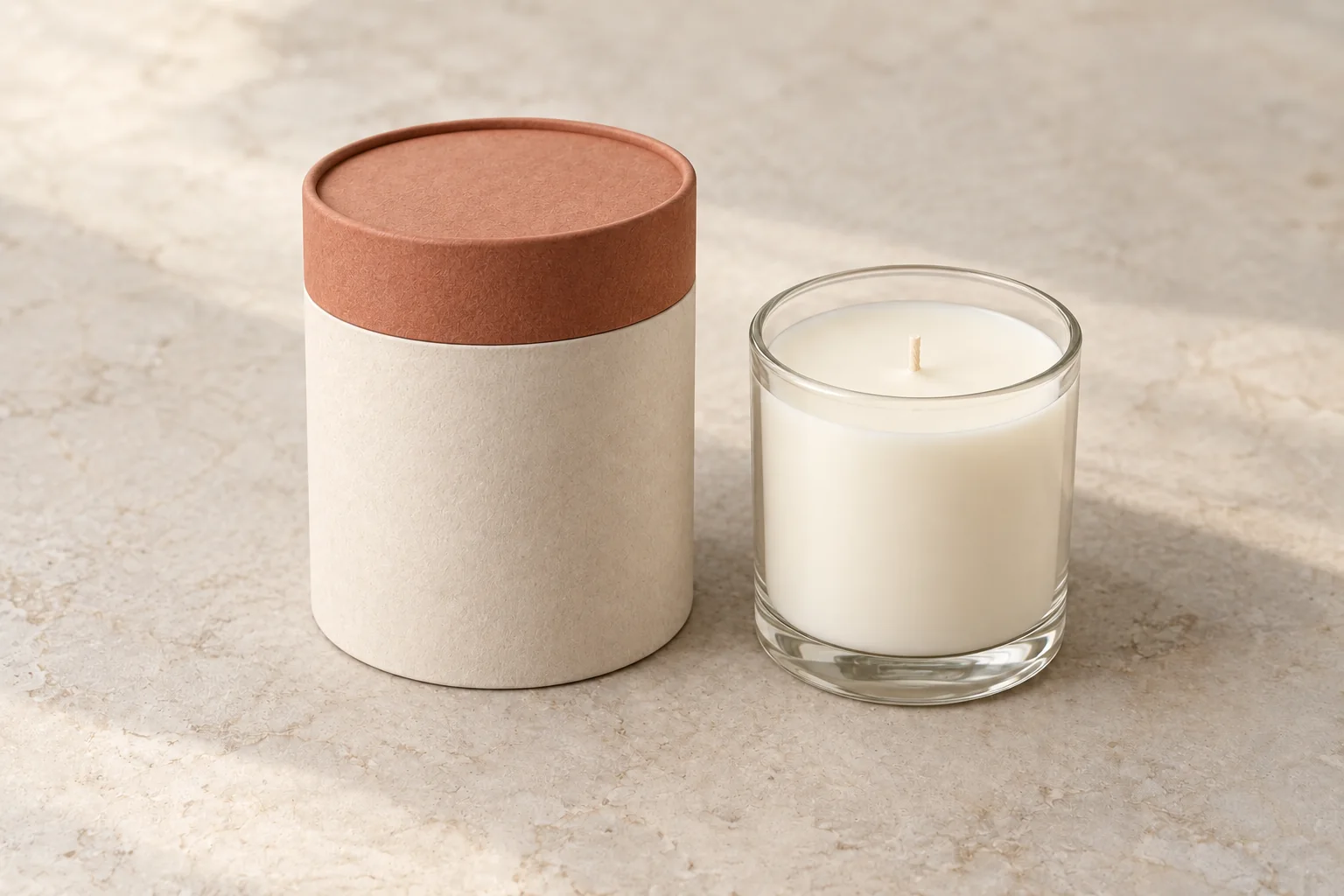
The rendered candle has no jar lid. A real lid, label or raised decoration may become the widest point, so the actual finished product must set the usable tube diameter and removal space. Record its filled weight as well as its height.
The illustration suggests a lift-off paper tube and a locating piece. Its apparent fit does not establish a viable base or insert.
Review where the jar's weight is carried, how a person lifts it out and who packs it. This is outer presentation packaging for an unlit candle; protection of glass in shipment belongs in the agreed pack-out checks.
The generated open view shows the intended presentation. The schematic marks three checks for a real jar; it is not a dieline or an approved construction.
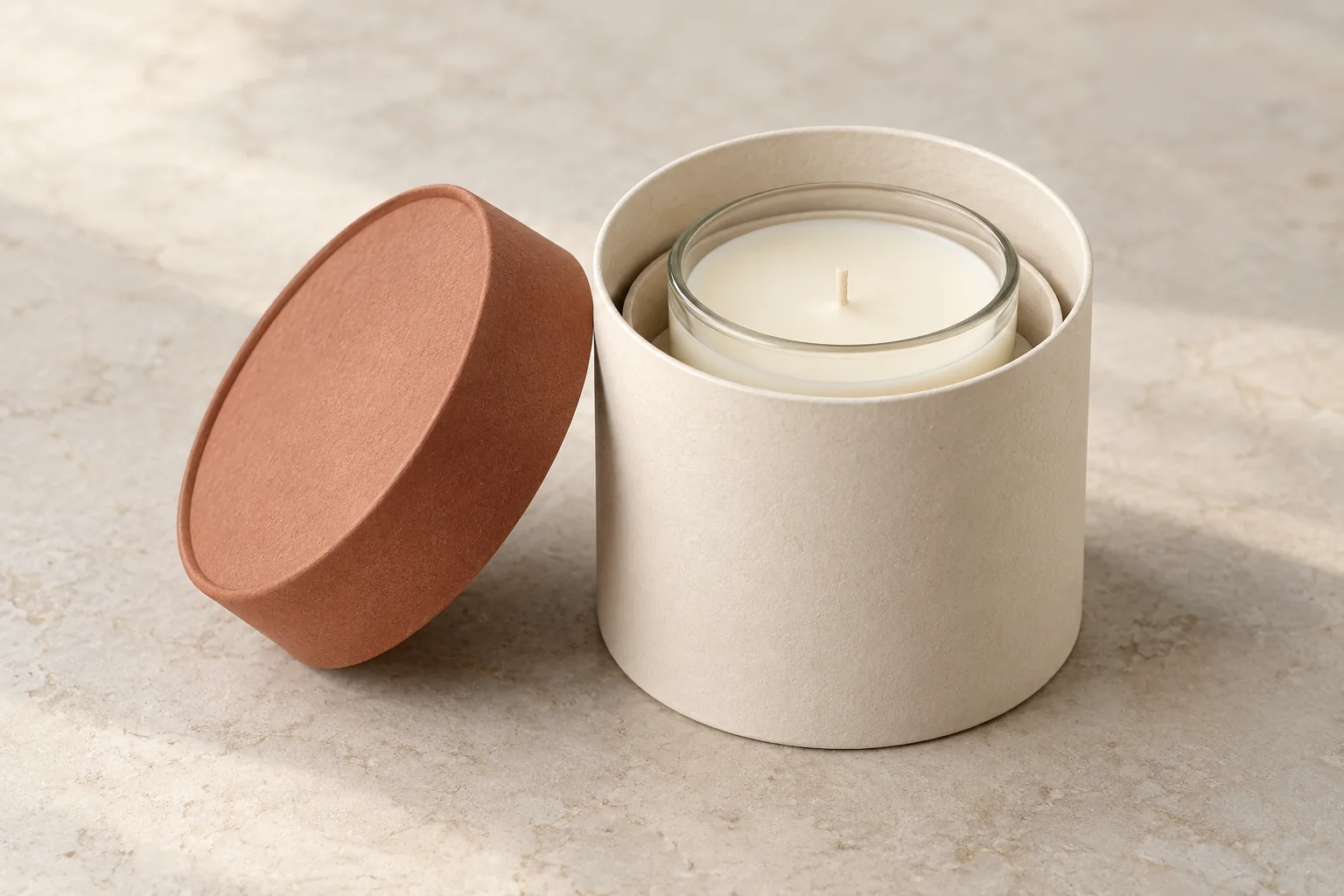

These are proposed checks for a future project. None has been performed for the pictured concept.
Send a jar photo, widest diameter, full height, filled weight, intended quantity and destination. Tell us who will pack it and whether you need an outer shipping carton reviewed. Unknown details can stay open for discussion.