
How to plan a cosmetic carton range
A serum bottle, cream jar and cleanser can look like one collection while needing different carton sizes and artwork. Define the shared appearance once, then keep a separate specification and approval record for each SKU.
SKU means an individual product or variant in your range. A product list, approximate quantities and one visual reference are enough to start the conversation; final dielines and print files can follow.
Discuss my carton range ↗︎One visual direction, separate product records
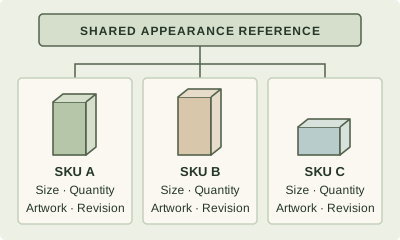
- Shared across the range
- Define logo placement rules, typography, colour references, paper appearance and finish intent. Show which elements should stay consistent and which identify the product or variant.
- Separate for each SKU
- Record the complete product dimensions with units, filled weight, orientation and any insert. Identify carton size, structure, quantity, artwork, dieline revision and approval status separately. Matching colours do not establish product fit.
Start from the actual bottle or jar, including its cap and label. Distinguish product dimensions from inside or outside carton dimensions. A change in the product, closure or insert should trigger a fit review rather than an automatic reuse of the previous carton.
Plan quantities by size and artwork
List quantities against each SKU and artwork variant, including languages or markets if these differ. YDP’s minimum order quantity is 500 pieces; how different sizes or designs are grouped for quotation must be confirmed for your range. Do not assume a total split across versions meets the same order basis.
State whether cartons arrive individually labelled or packed as an assortment. Record quantities per assortment, carton identification and the delivery destination. Keep the product quantity, packaging order quantity and assortment count distinguishable.
Keep each artwork attached to the right dieline
A dieline is the flat template showing the carton’s cut and fold layout. Use the agreed template for each structure and size. When dimensions change, review the layout on the revised template rather than stretching the previous print file.
- Identify the pair: SKU, dieline ID and revision, artwork revision and date.
- Separate the purpose: identify structure lines, printed artwork and requested finishes in the file preparation agreed for the project.
- Name the status: draft, under review or approved; replace vague filenames such as “final-new”.
- Record changes: list what changed, who will check it and which previous approval it replaces.
Before approval, your team should check product name, variant, language, net contents, label copy and codes on each artwork. Identify who owns that content and who approves the physical package. A fit sample does not confirm the label copy, and a digital proof does not confirm physical fit.
Review colour on the intended paper
Give the range one named colour reference and identify any deliberate differences. Review the paper and board together with the surface finish: a screen preview is not a physical colour reference.
Ask which sample or proof represents the planned material and print route, and agree how the range will be compared. Record substitutions and unresolved differences. Do not assume identical appearance across different papers or finishes, or apply an unconfirmed numerical colour tolerance.
Start with a simple range list
- Each product: SKU name, photo, dimensions with units and weight if known.
- Order: quantity for each size and artwork, with any assortment plan.
- Shared appearance: one reference plus any paper, colour or finish preferences.
- Files: existing dieline and artwork IDs, revisions and open questions.
- People & timing: approval owner, destination and target arrival.
Download the editable range worksheet (TXT) ↓
No email needed. Fill in what you know, then copy useful details into your inquiry. Reference photos or a PDF can be attached to the form.
Explore the cosmetic packaging route for the complete range or custom folding cartons when the carton structure is already clear. Unknown specifications can remain open; sample and production scope will be confirmed for your project.
Send my range and open questions ↗︎